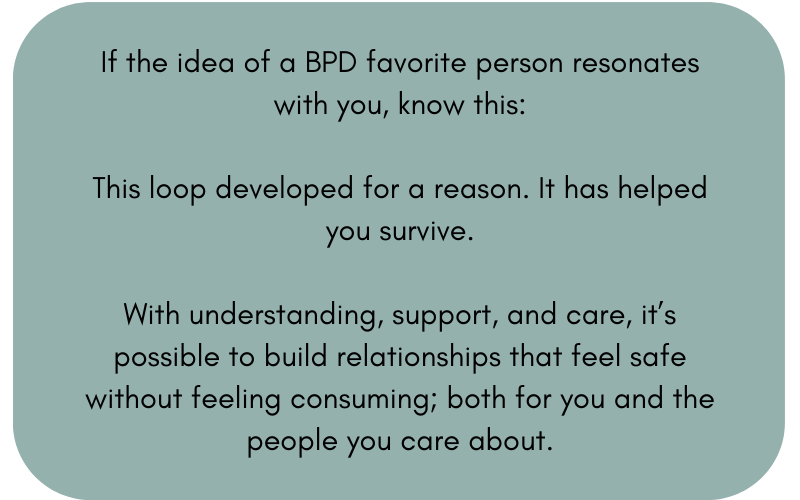
The phrase "BPD favorite person" is commonly found on platforms like TikTok and Reddit, sparking curiosity about its meaning. Unfortunately, this term is often linked to stereotypes about people with Borderline Personality Disorder (BPD), obscuring the deep emotional truth behind the dynamic.
For many individuals with BPD, this relationship isn't driven by control or obsession. Instead, the dynamic centers on attachment, the regulation of their nervous system, and a profound need for safety.
Understanding this type of connection is essential for gaining deeper insight into the lived experiences of those with BPD.
What Is a Favorite Person in BPD?
A "favorite person" is a term often used by individuals with BPD to describe someone who holds immense emotional importance in their life. This is not a clinical diagnosis but a way for people with BPD to articulate a complex experience.
This might be a partner, family member, close friend, or therapist. The relationship with them is valued not because they are viewed as "everything," but because it offers a vital sense of emotional relief and stability.
The influence of this person often includes:
Emotional Stabilization: They serve as an anchor, helping to regulate the individual's feelings.
Mood and Security Influence: Their presence or status in the relationship strongly impacts the person's sense of security and overall emotional state.
Representation of Key Qualities: They embody qualities like consistency, reassurance, and connection. These are qualities that the individual most likely did not experience in previous relationships.
Why Do People With BPD Develop a Favorite Person?
Borderline personality disorder is often rooted in attachment wounds and relational trauma. Many individuals grew up in environments where emotional support was unpredictable. Parents or caregivers did not provide safety, consistency, or emotional connection.
Over time, their nervous system adapts by learning:
Connection feels essential for safety
Emotional regulation happens through relationships
Loss or distance feels threatening, not just painful
A favorite person often becomes an external anchor, someone the nervous system associates with calm, validation, and emotional steadiness.
This isn’t weakness. It’s a survival strategy.
Emotional Intensity and Attachment
People with BPD experience emotions deeply and vividly. When connection feels good, it feels really good. When it feels threatened, the distress can feel overwhelming.
Because of this emotional intensity:
Attachment can form quickly
Disconnection can feel catastrophic
Reassurance can feel regulating
The favorite person often becomes linked to emotional relief, which can unintentionally place a lot of pressure on the relationship.
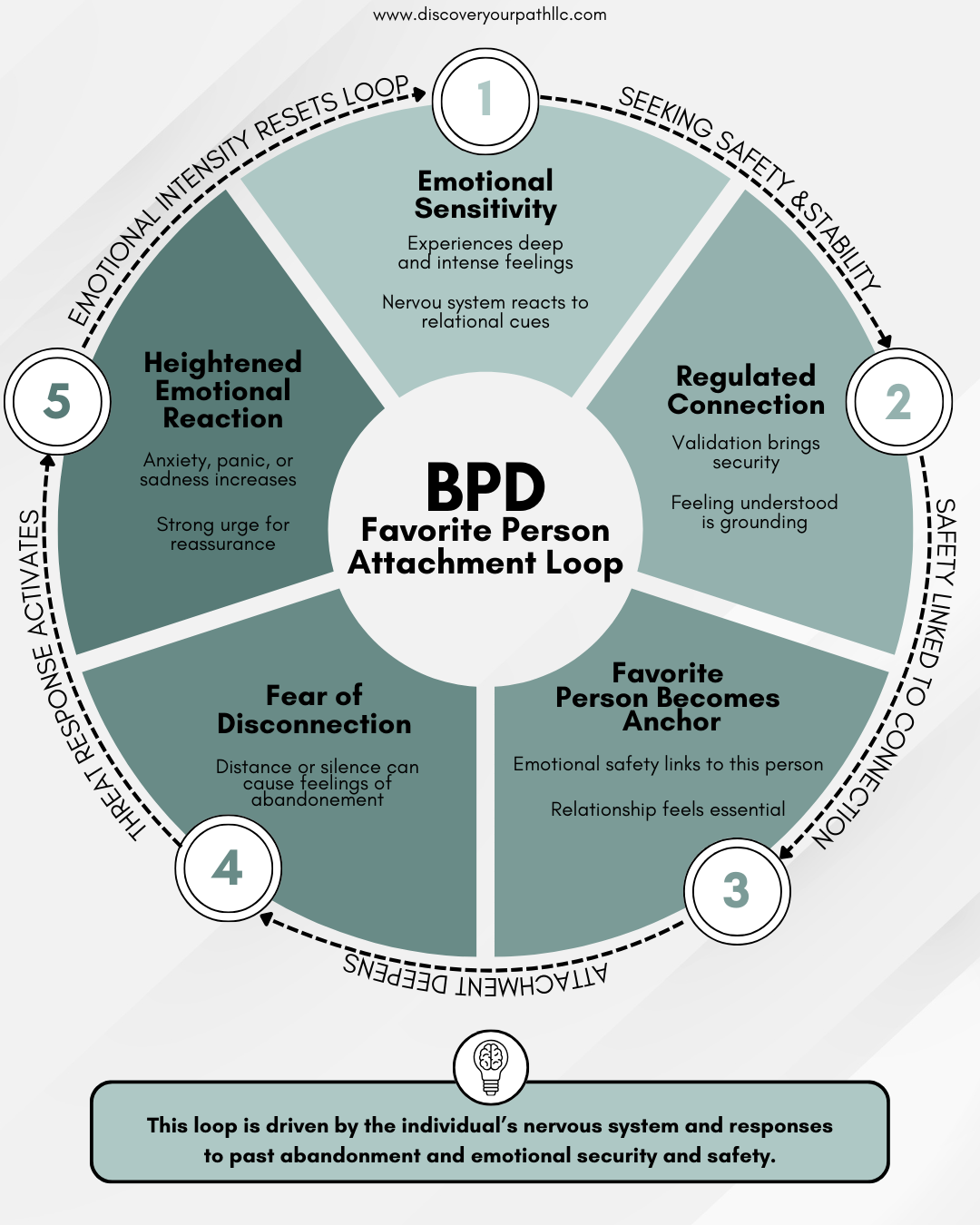
The why behind this is due to the individual’s nervous system and attachment wounds. The dynamic forms a loop. Not because the person is selectively choosing their favorite person, but because their brain is trying to create safety the only way it knows how.
The loop below illustrates how emotional sensitivity, attachment, and fear of disconnection can reinforce one another in borderline personality disorder. Each step flows into the next, creating a cycle that can feel difficult to step out of, especially without support.
It often begins with emotional sensitivity, feeling emotions deeply and quickly. When that connection brings relief, the sense of safety becomes linked to one person. Over time, fear of disconnection activates a threat response, leading to heightened emotional reactions. Those heightened emotions then increase sensitivity again, reinforcing the cycle.
This loop isn’t a failure of willpower or emotional maturity. It’s a nervous system doing its best to protect someone who learned early on that connection can be fragile.
Why the Term “Favorite Person” Is So Misunderstood
From the outside, the phrase can sound dismissive or alarming. It’s often mischaracterized as clinginess, dependency, or manipulation.
In reality, many people with BPD:
Feel shame about how intense the attachment feels
Try to hide or minimize their needs
Are painfully aware of how vulnerable the bond is
Most are not trying to overwhelm anyone. They are trying to feel safe in their body and emotions.
Healing Without Shame
Healing doesn’t mean forcing yourself to stop caring deeply. It means building more internal and external sources of safety so one relationship doesn’t have to hold everything.
Therapy can help by:
Strengthening emotional regulation skills
Exploring attachment patterns with compassion
Creating a sense of internal stability
Expanding support beyond one person
The goal isn’t detachment, it’s secure connection.