Burnout vs Depression: How to Tell the Difference (And Why It Matters)
If you’re exhausted, unmotivated, and wondering, “Is something wrong with me?”, you’re not alone.

You might feel:
Constant fatigue
Brain fog
Irritability
Low motivation
Trouble concentrating
Emotional numbness
So how do you know if you’re burned out… or clinically depressed?
The difference matters, because the solution is different.
What Is Burnout?
Burnout is a state of emotional, mental, and physical exhaustion caused by prolonged stress — most often work-related stress.
The World Health Organization classifies burnout as an occupational phenomenon, not a medical condition.
Burnout typically includes:
Feeling drained and depleted
Increased cynicism or detachment from work
Reduced effectiveness or productivity
Dreading specific responsibilities
“I just can’t do this anymore” energy
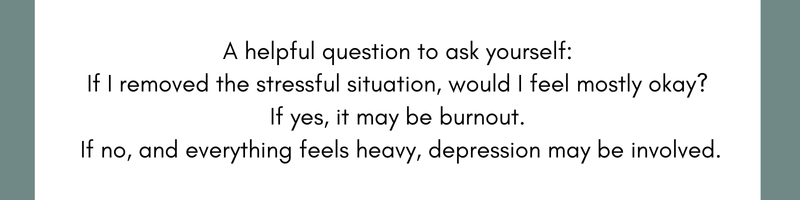
Key feature: Burnout is usually tied to a specific environment (job, caregiving, school, etc.).
You may still enjoy other parts of life — just not the thing that’s overwhelming you.

What Is Depression?
Depression (Major Depressive Disorder) is a clinical mental health condition that affects mood, energy, sleep, appetite, and thinking patterns.
Unlike burnout, depression is not limited to one setting.
Common symptoms include:
Persistent sadness or emptiness
Loss of interest in most activities
Changes in sleep (too much or too little)
Appetite changes
Feelings of worthlessness or guilt
Hopelessness
Thoughts of death or suicide
Key feature: Depression affects your whole life — not just one stressor.
Even things you used to enjoy may feel flat or pointless.
Can You Have Both?
Yes. And this is common.
Long-term burnout can develop into depression.
Especially for people with:
ADHD
Trauma history
High-functioning anxiety
Perfectionistic tendencies
Chronic stress changes the nervous system. Over time, exhaustion turns into shutdown.
Why Burnout Feels Like “Laziness”
Many people say:
“I’m just lazy.”
“I should be able to handle this.”
“Other people are fine.”
Burnout mimics executive dysfunction. Depression mimics low motivation.
Neither is laziness.
Both are nervous system overload.
How to Recover from Burnout
Burnout recovery requires:
Reducing the stressor (not just coping with it)
Boundaries
Real rest (not doom scrolling)
Nervous system regulation
Possibly workload changes
Burnout cannot be fixed by pushing harder.
How Depression Is Treated
Depression may require:
Therapy
Medication
Lifestyle interventions
Social support
Structured behavioral activation
If you’re experiencing hopelessness or suicidal thoughts, please seek immediate professional support.
Text “HELLO” to 741741 to anonymously speak to a crisis counselor. Suicide Hotline: Call or text 988.
When to Seek Help
Consider reaching out to a mental health professional if:
Symptoms last more than two weeks
You feel numb or hopeless
You can’t function at work or home
You’re using substances to cope
You’re having thoughts of self-harm
Burnout deserves support.
Depression deserves treatment.
Both deserve compassion.
If you’re searching “burnout vs depression,” chances are you’re overwhelmed.
Instead of asking, “What’s wrong with me?”
Try asking, “What has my nervous system been carrying for too long?”
Healing starts with understanding.
And you’re already doing that.
